Virtual Assistant for Food and Beverage Brands: 2026 Task Guide
What a virtual assistant for food and beverage brands actually does — e-commerce, social, customer service, and retailer admin — plus what to delegate first and what it costs.
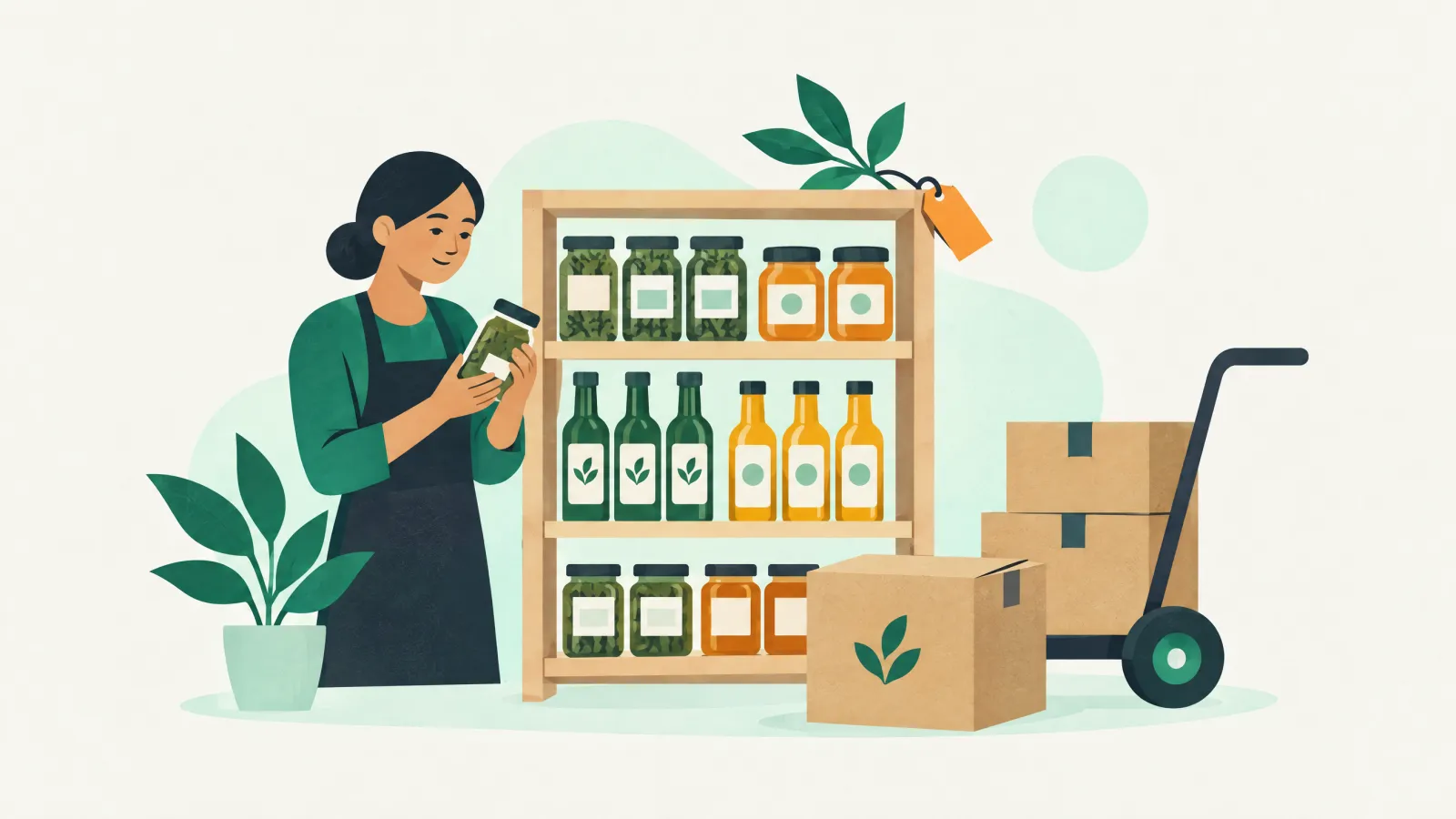
A virtual assistant for food and beverage is a remote professional who runs the marketing, e-commerce, customer-service, and back-office admin behind a food or drink brand — managing social media, Shopify and Amazon stores, customer inquiries, retailer and distributor coordination, and promotional campaigns — so founders can focus on product, sales, and growth instead of the daily operational grind.
Most articles on this topic quietly assume you run a restaurant. This one does not. If you make, sell, or market a food or beverage product — a packaged-food line, a specialty drink, a direct-to-consumer (D2C) brand, a catering company, or a recipe and food-content business — your needs look nothing like a dine-in operator’s. You are not managing reservations or shift rosters; you are managing listings, orders, content, retailers, and customers across half a dozen channels. This guide covers exactly that: what a food and beverage virtual assistant can (and cannot) do for a brand, the tasks to delegate first by business type, what it costs, and how to hire one. If you operate a dine-in restaurant or kitchen instead, our companion guide to a virtual assistant for restaurants and chefs is the better fit.
Key takeaways
- A virtual assistant for food and beverage is a remote specialist for food and drink brands — CPG makers, beverage brands, D2C food companies, caterers, distributors, and food creators — not dine-in restaurant operations.
- The highest-leverage tasks are digital and administrative: social media and content, e-commerce store management (Shopify, Amazon), customer service, email and promo marketing, influencer and UGC coordination, and retailer/distributor admin.
- A remote VA cannot do physical work — cooking, packing, warehouse handling, or in-person tastings. The win is offloading the screen-based work that surrounds the product.
- Delegate first the tasks that drain the most hours but need the least context: inbox and customer-service replies, order admin, and social scheduling.
- Expect roughly USD $8–$25 per hour depending on skill and region — far below the cost of a local hire for the same scope (figures illustrative; see our pricing for current rates).
- A specialized F&B VA already understands your channels (Amazon Seller Central, Faire, TikTok Shop) and your customers, so onboarding is faster than with a generalist.
What Does a Virtual Assistant for Food and Beverage Do?
A food and beverage virtual assistant handles the recurring, screen-based work that keeps a food or drink brand running and growing: publishing and replying on social media, keeping e-commerce listings accurate, answering customer questions, processing orders and returns, coordinating with retailers and distributors, and running email and promotional campaigns. They are an extension of your team who absorbs the admin so the founder can stay on product and partnerships.
The crucial distinction — and the one almost every other guide on this keyword gets wrong — is brand versus restaurant. A restaurant VA orbits dine-in operations: reservations, table management, shift scheduling, menu updates. A food and beverage brand VA orbits the product and its channels: Shopify and Amazon, wholesale buyers, content, and customer experience. If your revenue comes from selling a packaged product rather than serving meals on-site, the brand model below is what you need.
Be realistic about remote limits. A virtual assistant works on a screen, not in your kitchen or warehouse. They can coordinate a co-packer, schedule a fulfilment pickup, and chase a delayed pallet — but they cannot cook, bottle, pack, or run a physical tasting. The value is in offloading everything around the product, not the hands-on production itself.
Core Tasks a Food and Beverage VA Can Handle
Across food and beverage brands, the work clusters into six buckets. Most brands start with two or three and expand as trust builds.
| Category | What the VA does | Tools they typically use |
|---|---|---|
| Social media & content | Schedule posts, write captions, format reels, manage a content calendar, respond to comments and DMs, build UGC galleries | Later, Meta Business Suite, Canva, CapCut, TikTok |
| E-commerce & order admin | Maintain product listings, update inventory and pricing, process orders and refunds, manage subscriptions, fix listing errors | Shopify, Amazon Seller Central, Recharge, Faire |
| Customer service | Answer email/chat tickets, handle “where is my order” queries, manage returns, collect and respond to reviews | Gorgias, Zendesk, Gmail, Yotpo |
| Retailer & distributor coordination | Update wholesale portals, follow up with buyers and brokers, prep sell sheets and line forms, chase POs and remittances | Faire, RangeMe, distributor portals, spreadsheets |
| Email & promo marketing | Build and send newsletters, set up flows, schedule promo calendars, segment lists, report on campaign performance | Klaviyo, Mailchimp, Omnisend |
| Vendor, inventory & event admin | Track stock levels, reorder packaging, coordinate co-packers and 3PLs, manage trade-show and sampling logistics paperwork | Sheets, Airtable, Asana, supplier portals |
Two of these — e-commerce and social — are where most brands see the fastest return. A dedicated social media virtual assistant can free up the dozen-plus hours a week founders sink into content, while an e-commerce specialist keeps your storefront accurate and your customers answered. For a wider look at storefront support, our guide to virtual assistants for e-commerce goes deeper on the order-to-fulfilment workflow.
Tasks by Food & Beverage Business Type
“Food and beverage” is not one business. A CPG manufacturer, a D2C snack brand, and a recipe creator delegate very different work. Find your row below and start there.
| Business type | What they delegate first | High-value next steps |
|---|---|---|
| CPG / packaged-food maker | Retailer portal updates, broker and buyer follow-ups, SKU/UPC and catalog admin, sell-sheet prep | Trade-show logistics, sampling program admin, nutritional-panel data entry, distributor reporting |
| Beverage / specialty-drink brand | Social content, influencer outreach, Amazon and Shopify listing management | Subscription management, review responses, promo-calendar planning, on/off-premise account tracking |
| D2C food brand | Customer service tickets, order and refund processing, subscription admin | Email flows, UGC collection, retention reporting, marketplace expansion (Walmart, TikTok Shop) |
| Caterer / specialty food service | Inquiry intake, quote follow-ups, calendar and proposal admin, vendor coordination | CRM hygiene, review management, event-logistics paperwork, email marketing to past clients |
| Food creator / recipe blogger | Recipe and blog formatting, Pinterest scheduling, comment moderation, link checks | Sponsorship coordination, newsletter management, affiliate-link admin, media-kit upkeep |
| Distributor / importer | Order entry, vendor and account coordination, document and invoice admin | Inventory reporting, onboarding new accounts, portal management, follow-up sequences |
Notice the pattern: the “delegate first” column is always the repetitive, high-volume admin that needs little judgement, while the “next steps” column needs more brand context and trust. That sequencing is deliberate — and it is the single biggest factor in whether delegation actually sticks.
The E-Commerce & Retail-Channel Tasks Other Guides Miss
This is where a brand-focused VA earns their keep and where restaurant-coded guides go silent. Modern food and beverage brands sell across a tangle of channels, and each one generates ongoing admin a VA can own:
- Amazon Seller Central — listing creation and optimization, A+ content uploads, inventory and FBA shipment tracking, review and case management. An Amazon virtual assistant can run this channel end to end.
- Shopify & D2C store — product uploads, collection curation, discount codes, app management, theme tweaks, abandoned-cart flows.
- Wholesale marketplaces — keeping Faire, RangeMe, and Mable listings current, responding to buyer messages, processing wholesale orders.
- Emerging channels — TikTok Shop, Walmart Marketplace, and Etsy listing sync, so your catalog stays consistent everywhere it sells.
- Catalog & data hygiene — UPC/SKU management, pricing consistency, image and copy updates across every storefront.
- Review & reputation management — collecting reviews, responding promptly, flagging recurring product issues to you.
None of this is glamorous, but all of it is the connective tissue that keeps a multi-channel brand from leaking sales. Offloading it is often the difference between a founder spending Sunday night fixing Amazon listings and spending it planning the next product launch.
What a Food & Beverage VA Cannot Do
Honest scoping prevents disappointment. A remote virtual assistant cannot:
- Cook, bottle, label, or pack product — that is physical, on-site work.
- Handle warehouse, inventory-picking, or fulfilment physically (they can coordinate a 3PL that does).
- Run an in-person tasting, demo, or trade-show booth (they can handle all the logistics and paperwork behind it).
- Make final food-safety or regulatory decisions — they can compile, organize, and maintain compliance documentation, but a qualified person signs off.
The rule of thumb: if the task happens on a screen, a great VA can own it. If it happens with your hands, it stays in-house. Knowing this line up front is what separates a smooth delegation from a frustrating one.
That boundary actually makes scoping easier, not harder. Every brand has a long list of screen-based work hiding in plain sight — the abandoned-cart email no one set up, the Amazon case left open for a week, the wholesale inquiry that sat unanswered, the product photos that never made it onto Faire. None of that needs hands; all of it needs hours. When you map your week against the “screen versus hands” test, the delegate list usually turns out to be far longer than you assumed, and the production work that truly requires you turns out to be a smaller core than it felt like. That clarity is half the value of the exercise: it shows founders that the bottleneck was never the cooking or the product — it was the operational tail wrapped around it, which is exactly the part a remote assistant is built to absorb.
What to Delegate First: A Simple Sequence
Founders usually try to hand off the hardest, scariest task first, burn out on training, and give up. Do the opposite. Delegate first the work that costs you the most hours but takes the least context to transfer. The diagram below shows how the most common F&B brand tasks sort.
In practice the first wave is almost always the same three things: customer-service replies, order and refund admin, and social-media scheduling. They drain hours, recur daily, and transfer cleanly with a short screen recording and a checklist. Once your VA proves reliable on those, you graduate them to email strategy, listing optimization, and retailer follow-ups — the work that moves the needle but needs them to understand your brand voice and customers first. The same logic that powers a full marketing virtual assistant engagement applies here: prove the basics, then layer on strategy.
How Much Does a Food and Beverage Virtual Assistant Cost?
Pricing depends on skill level, region, and whether you hire part-time, full-time, or by project. The ranges below are illustrative industry figures to set expectations — check our current virtual assistant pricing for exact rates.
| VA tier | Typical hourly (USD, illustrative) | Best for |
|---|---|---|
| General admin & CS VA | $8–$12 | Inbox, order admin, basic social, data entry |
| E-commerce / social specialist | $12–$18 | Shopify/Amazon management, content, email |
| Senior / multi-skilled VA | $18–$25 | Channel strategy, retailer coordination, reporting |
Compare that to a local part-time hire and the math is stark. A founder spending 15 hours a week on customer service and social media at an effective rate of $40+ an hour is burning thousands of dollars of their own time monthly on work a $12/hour specialist can do better. Reinvesting those reclaimed hours into product and sales is the entire point — the VA pays for themselves the moment that traded time generates more than it costs.
Not sure which tasks to hand off first? Catalyst matches food and beverage brands with trained, ready-to-start virtual assistants who already know Shopify, Amazon, and your customer channels. Book a free consultation →
A Worked Example: A D2C Snack Brand
Consider “Marisol,” the founder of a fast-growing D2C snack brand selling on Shopify and Amazon, plus a handful of regional retailers via Faire. She is working 55-hour weeks and most of it is admin, not growth. Here is a slice of how she sequenced her first VA hire (an illustrative scenario):
| Task | Hrs/wk | Wave | Why |
|---|---|---|---|
| Customer-service email & DMs | 8 | Now | High volume, low context, clear SOP |
| Shopify & Amazon order/refund admin | 5 | Now | Repetitive, rules-based |
| Social scheduling & comment replies | 6 | Now | Drains evenings; templated |
| Klaviyo email flows & campaigns | 4 | 90 days | Needs brand voice + analytics |
| Faire buyer follow-ups & sell sheets | 3 | 90 days | Needs account context |
| Brand & product strategy | 5 | Keep | Founder’s genius zone |
The first wave alone — customer service, order admin, and social — totals 19 hours a week. Handed to a trained VA, Marisol reclaims more than two full working days, which she redirects into new-product development and pitching national retailers. Within a quarter she layers on email and wholesale follow-up, and the VA becomes the operational backbone of the brand. That is the whole game: trade low-value drain for high-value growth work.
How to Hire the Right Food & Beverage VA
A few principles make the difference between a hire that sticks and one that fizzles:
- Hire for your channels, not just “F&B.” A VA who already lives in Shopify, Amazon Seller Central, Klaviyo, and Faire will be productive in days, not months.
- Document as you delegate. Record a short Loom and a checklist the last time you do each task. You cannot hand off a process that only exists in your head.
- Start with one or two tasks, then expand. Build trust on quick wins before handing over brand-voice or retailer-relationship work.
- Agree on outcomes and checkpoints, then let them own it. Micromanaging recreates the work you delegated.
For a step-by-step on screening, onboarding, and the first 30 days, see our full guide on how to hire a virtual assistant. Brands based in the US or UK can also explore region-specific support — hire a virtual assistant in the USA or hire a virtual assistant in the UK — for time-zone-aligned coverage.
Frequently Asked Questions
What does a food and beverage virtual assistant do?
A food and beverage virtual assistant runs the remote, screen-based work behind a food or drink brand: social media and content, e-commerce store management (Shopify, Amazon), customer service, order and refund processing, email marketing, and retailer or distributor coordination. They free the founder to focus on product, partnerships, and growth.
How much does it cost to hire an F&B virtual assistant?
Rates typically run from about USD $8–$25 per hour depending on skill and region — general admin and customer-service VAs at the lower end, e-commerce and social specialists in the middle, and senior multi-skilled VAs at the top. That is well below the cost of a comparable local hire for the same scope.
Can a virtual assistant help my food brand sell on Amazon and Shopify?
Yes. A specialized VA can create and optimize Amazon listings, manage A+ content and FBA shipments, handle Shopify product uploads and discount codes, sync inventory across channels, and process orders and refunds — keeping your storefronts accurate and your customers answered across every marketplace.
Are food and beverage VAs only for restaurants, or also for brands?
Both exist, but they do different work. A restaurant VA supports dine-in operations like reservations and shift scheduling. A food and beverage brand VA supports the product and its sales channels — e-commerce, social, customer service, and retailer admin. This guide focuses on brands; restaurant operators should see our dedicated restaurant VA guide.
Can a VA manage my D2C food subscription and order fulfilment?
A VA can manage the subscription admin — updating Recharge or your subscription app, handling skips, swaps, and cancellations, and processing orders and refunds — and coordinate with your 3PL or co-packer on fulfilment. They cannot physically pick, pack, or ship product themselves; that stays with your fulfilment partner.
Can a food and beverage VA handle nutritional labeling and compliance admin?
A VA can support compliance administratively: entering nutritional-panel data, organizing allergen and ingredient documentation, maintaining co-packer paperwork, and keeping records audit-ready. Final food-safety and regulatory decisions should be signed off by a qualified person; the VA handles the organization and upkeep, not the sign-off.
How quickly can I hire a food and beverage virtual assistant?
With a specialist matching service, brands are often paired with a trained, ready-to-start VA in around two weeks — faster than recruiting locally because the screening and channel-skill vetting are already done. The first tasks (customer service, order admin, social) can usually start within days of onboarding.
What is the difference between a general VA and a food-industry VA?
A general VA can handle admin but needs ramp-up time on your channels and category. A food-industry VA already understands food and beverage workflows — marketplaces like Faire, e-commerce platforms, review management, and the rhythm of promo calendars and retailer follow-ups — so they onboard faster and need less hand-holding.
Turn Brand Admin Into Reclaimed Hours
The food and beverage brands that scale are rarely the ones whose founders do the most — they are the ones who hand off the right work to the right people. A virtual assistant for food and beverage gives you that leverage: the marketing, e-commerce, and customer-service backbone that lets you stay on product, sales, and the relationships only you can build.
Catalyst Outsourcing matches food and drink brands with trained, ready-to-start virtual assistants who already know your channels — from Shopify and Amazon to Faire and Klaviyo. Explore our virtual assistant services, see what a VA costs, or book a free consultation to map your delegation plan. As Harvard Business Review notes, the best leaders are the ones who delegate the best.
Related Virtual Assistant Services
Related Industries
Related articles
- Customer Service Virtual Assistant: Complete Hiring Guide
- Social Media Management: The Complete Workflow & Guide
- What does a Shopify VA do? Tasks, cost and safe store access
- What does an Amazon VA do? Seller Central tasks, cost and hiring safely
- What does a social media VA do? Tasks, cost and what to delegate first
- Amazon FBA tasks to hand a VA: inventory, shipments, fee recovery and listings
Helpful guides
- What do virtual assistants do?
- How a managed virtual assistant works
- How much does a virtual assistant cost?
- Virtual assistant vs in-house vs freelancer
- Compare virtual assistant options
- Tasks to delegate to a virtual assistant
- Virtual assistant interview questions
- What is an employer of record?
- Virtual assistant & outsourcing glossary