Outbound Call Center Virtual Assistant: Benefits & Costs
What an outbound call center virtual assistant does, what it costs versus an in-house SDR or full call center, the tools and compliance basics, and how to hire one that lifts pipeline instead of burning your list.
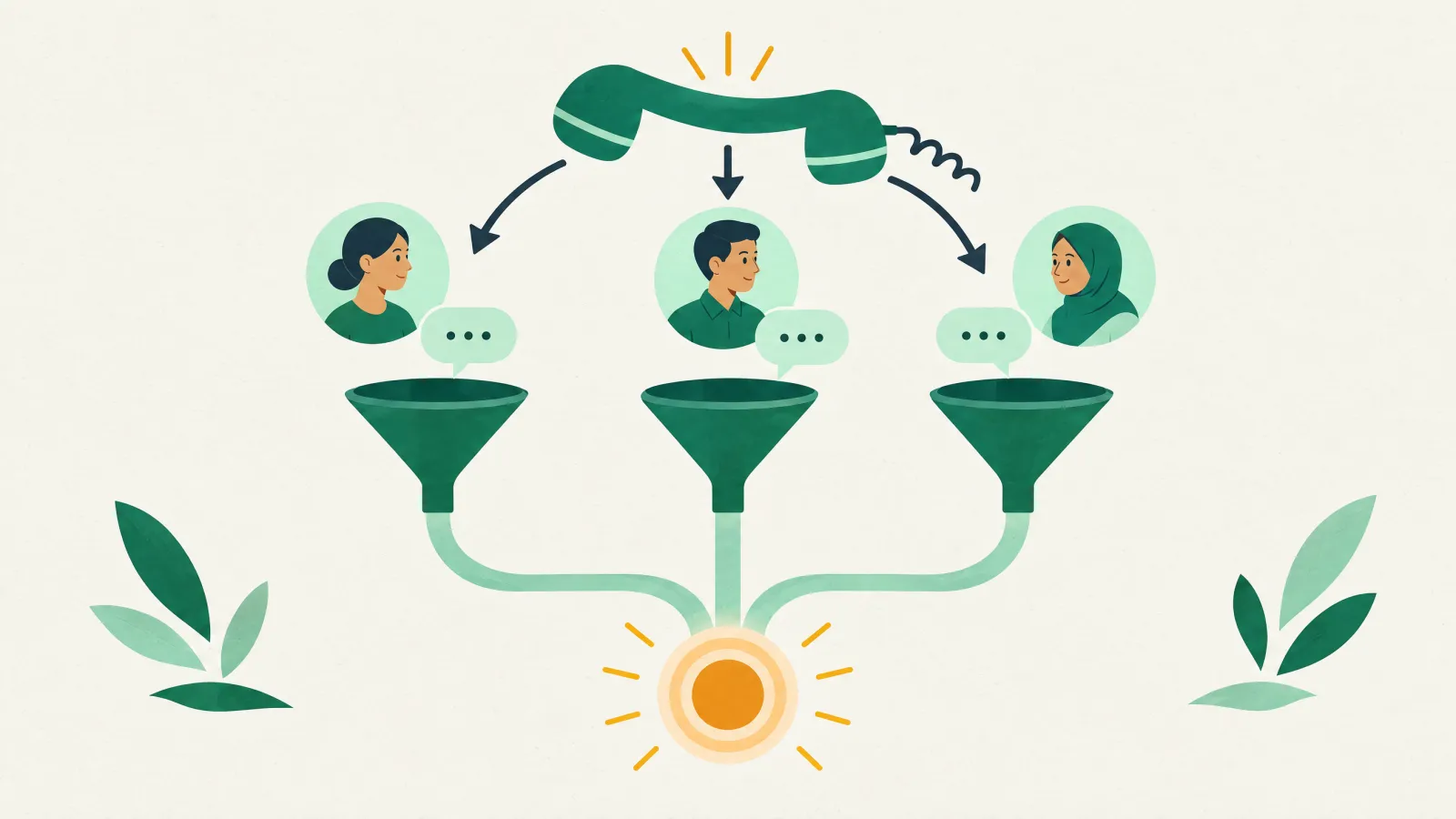
An outbound call center virtual assistant makes your outbound calls — cold outreach, lead qualification, appointment setting, and follow-ups — logging every call in your CRM, so your sales team spends time closing, not dialling. This guide explains exactly what that role covers, what it costs versus building an in-house team, the tools and compliance basics behind good outbound calling, and how to hire one that lifts your pipeline instead of just burning your list.
Most sales teams do not have a closing problem — they have a conversation problem. Reps spend their best hours dialling numbers and leaving voicemails instead of talking to buyers ready to move. An outbound calling VA absorbs that top-of-funnel grind at volume, so the people you pay to close spend their day in live, qualified conversations. This is the calling engine behind a modern sales motion, and the sections below map how it works, what it costs, and where it fits.
Key takeaways
- An outbound call center virtual assistant is a remote specialist who runs your outbound dialling at volume — cold outreach, lead qualification, appointment setting, follow-ups, and survey calls — and logs every disposition in your CRM.
- The core value is separation of labour: the VA generates and qualifies conversations; your closers spend their time on the ones worth closing.
- It is typically far cheaper and faster to stand up than an in-house SDR bench, and more flexible than a full call centre — you scale dials up for a campaign and down when it ends.
- Good outbound respects compliance basics — DNC list scrubbing, calling-window rules, and consent for the region you dial into — treated as general orientation, not legal advice.
- The role lives or dies on tools and process: a clean list, a working dialler, a tight script, and disciplined CRM logging turn dials into a measurable pipeline.
- Judge the VA on connect rate, qualified conversations, and meetings booked — not raw call count — and pair them with an appointment setter and closer for a full motion.
1. What Is an Outbound Call Center Virtual Assistant?
An outbound call center virtual assistant is a trained remote agent who runs the outbound calling side of your business — the proactive, outward calls your team makes to prospects and customers, rather than the inbound calls that come to you. Where an in-house rep juggles calling with a dozen other duties, this VA is dedicated to the phone: they work a list, place calls at volume, follow a script, qualify or disqualify each contact, book the meetings worth booking, and record the outcome of every attempt in your CRM.
For the inbound side, answering your business calls and booking what comes in, see our virtual receptionist page.
The distinction from an in-house hire is the model. You are not recruiting, housing, or equipping a full-time employee for a function whose volume swings with your campaigns. You access dedicated calling capacity for the hours you need and dial it up or down as the pipeline demands. That flexibility is the point: outbound volume is spiky, and paying a fixed salaried bench to sit idle between campaigns is exactly the cost a VA model removes. If you are still weighing the broader remote-support decision, our overview of virtual assistant services maps how the lanes fit together.
It helps to name what this role is not. It is not an inbound customer-service seat waiting for calls to arrive — that is the counterpart covered by a customer-service virtual assistant. And it is not purely a booking specialist: an appointment setter focuses narrowly on getting meetings on the calendar, whereas an outbound calling VA runs the whole campaign engine, of which booking is one output. Think of this role as the volume calling operation that feeds everything else downstream.
2. What Does an Outbound Call Center Virtual Assistant Actually Do?
The job is broader than "make calls." A capable outbound VA runs a repeatable loop: pull the list, dial, qualify, log, and hand off. The table below maps the core tasks to what the VA does and the sales benefit each one drives.
| Outbound task | What the VA does | Sales benefit |
|---|---|---|
| Cold outreach | Dials fresh prospect lists, opens the conversation, and gauges initial interest against your ideal-customer profile | Fills the top of funnel without pulling closers off deals |
| Lead qualification | Runs discovery questions (budget, need, authority, timing) and scores or routes each contact | Closers only spend time on genuinely sales-ready conversations |
| Appointment setting | Books qualified prospects straight into a rep's calendar and sends confirmations | A steady flow of booked meetings, fewer no-shows |
| Follow-up calls | Works the callback queue — unreturned voicemails, "call me next quarter," post-demo nudges | Recovers pipeline that slips through the cracks |
| Warm-lead nurturing | Re-engages inbound enquiries, event lists, and lapsed customers with timely calls | Higher connect and conversion than cold lists alone |
| Survey & feedback calls | Runs voice-of-customer, NPS, or win/loss calls and captures the answers | Fresh market signal to sharpen the pitch and product |
| CRM logging & disposition | Records the outcome of every call, updates fields, and sets the next action | A clean, trustworthy pipeline you can forecast from |
| List management | Cleans, de-dupes, and segments call lists; flags dead numbers and DNC entries | More live conversations per hour, fewer wasted dials |
Most rows do double duty: the calling VA both creates conversations and keeps the record clean. That combination — volume dialling plus disciplined disposition — is what separates a productive operation from a list that quietly rots. For the record-keeping half specifically, a dedicated CRM virtual assistant can partner with your caller so the data stays pristine as volume grows.
3. The Core Benefits of Hiring One
The case for an outbound calling VA is not just "cheaper calls." It is a structural change in how your sales time is spent, and the benefits compound.
Your closers stop dialling and start closing
This is the headline. When a dedicated VA owns the top-of-funnel calling, your highest-paid people stop burning their day on numbers that do not pick up and walk into conversations that are already qualified and booked. That single reallocation — drain work out, high-value selling time back — is usually where a business first feels the difference.
Volume you could not sustain in-house
Consistent outbound is a numbers game, and consistency is exactly what an overloaded rep cannot maintain. A VA whose only job is the phone keeps the dial count steady week after week, so your pipeline stops swinging between feast and famine. The activity a distracted rep does in bursts, a dedicated caller does every day.
Speed to stand up and flexibility to scale
Recruiting and ramping an in-house SDR takes months and a fixed cost. A trained outbound VA starts in a fraction of that time, and you flex the capacity with your campaigns — more dials for a launch, fewer in a quiet quarter — without a recruitment cycle or a redundancy conversation.
Cost efficiency without cutting corners
You avoid the loaded cost of an in-house seat — salary, benefits, office space, dialler licences, and management overhead — and pay instead for calling capacity. Directionally, that is a meaningful saving for small and mid-sized teams, and it frees budget to reinvest in the closers who convert the meetings your VA books. To pressure-test the maths, our guide to how much a virtual assistant costs gives realistic figures to plug in.
4. Outbound VA vs In-House SDR vs Full Call Center
The right calling model depends on your volume, budget, and how much control you need. The table below compares the three common options on the factors that actually decide the call — treat the cost and flexibility ratings as directional, not fixed quotes.
| Factor | Outbound VA | In-house SDR | Full call center |
|---|---|---|---|
| Setup cost & time | Low — starts in days to a couple of weeks | High — recruit, equip, ramp over months | High — contracts, minimums, onboarding |
| Ongoing cost | Pay for calling capacity; no fixed overhead | Salary + benefits + tools + management | Per-seat or per-call minimums, often steep |
| Flexibility | High — scale dials up/down per campaign | Low — fixed headcount | Medium — but usually locked to volume tiers |
| Control & brand fit | High — your script, your CRM, close collaboration | Highest — fully in your building | Lower — shared agents, less bespoke |
| Best for | SMBs and teams needing flexible, dedicated volume | Mature teams with steady, heavy pipeline needs | Very high volume, mass-market campaigns |
For most small and mid-sized businesses, the outbound VA sits in the sweet spot: more dedicated and brand-aligned than a shared call centre, far faster and cheaper to stand up than an in-house SDR bench, and flexible enough to match spiky campaign volume. A full call centre earns its keep only at large scale, and an in-house SDR makes sense once your pipeline is heavy and predictable enough to justify a fixed salary. Many growing teams start with a VA and add in-house seats later — a pattern our comparison of a virtual assistant versus an in-house hire unpacks in detail.
5. Where an Outbound Calling VA Fits in Your Sales Motion
An outbound VA is one part of a machine, not the whole thing, and it works best when its role is clearly bounded against the specialists on either side of it. The diagram below shows how prospecting inputs flow through the calling engine and out to your closers as booked, qualified meetings.
The top-of-funnel companions are worth naming so you do not duplicate roles. A structured follow-up cadence keeps the callback queue moving, and a deliberate cold-outreach strategy warms lists before the phone rings. If your primary need is pure lead generation rather than calling volume, the virtual lead-generation assistant role builds and sources the lists this engine dials. Keep each role in its lane and the whole motion compounds.
6. Cold vs Warm Calling: Two Different Motions
Not all outbound is equal, and a good VA runs cold and warm lists differently. Cold calling reaches prospects with no prior relationship — the connect rate is lower, the script leans on a strong opener and a clear reason to talk, and disqualifying fast matters as much as qualifying. It is a volume game where the win is finding the small percentage genuinely worth a closer's time.
Warm calling reaches people who have already raised a hand: an inbound form fill, a webinar sign-up, a lapsed customer, an event lead. Connect and conversion rates are far higher because there is context to reference, so the script is consultative rather than interruptive. The smartest operations prioritise warm lists first, because those calls convert fastest, then work cold volume to keep the top of funnel full. A capable caller adjusts tone, pace, and script to the list they are on — treating a warm lead like a cold one wastes the very interest that makes them warm.
7. Tools, Dialers, and the CRM Backbone
An outbound calling operation is only as good as the stack behind it. Three layers matter, and a VA who knows them turns dials into a measurable pipeline rather than noise.
The dialler
The dialler is the engine. Power and predictive diallers place calls automatically so the VA spends more minutes talking and fewer waiting on rings; a simple click-to-call setup works for lower-volume, higher-touch lists. The right choice depends on your volume and how regulated your calling is — higher-automation diallers demand tighter compliance discipline.
The CRM
The CRM is the memory. Every call needs a disposition — connected, no answer, callback, qualified, not interested, booked — plus updated fields and a next action. This is the unglamorous work that makes outbound compound: a well-logged list gets smarter with every pass, while an un-logged one decays into guesswork. It is where a caller and a lead-generation VA hand off cleanly, and where CRM discipline pays for itself in forecast accuracy.
Lists and enrichment
The list is the fuel. Clean, well-segmented lists mean more live conversations per hour; stale or duplicated lists burn the VA's time on dead numbers. Part of a strong VA's job is keeping the list healthy — flagging bad data, removing DNC entries, and segmenting so the highest-probability contacts get called first.
8. Compliance Basics: DNC, Calling Windows, and Consent
Outbound calling is regulated, and a professional operation treats compliance as a feature, not an afterthought. Rules vary by country and change over time, so what follows is general orientation to raise the right questions — not legal advice. Confirm the specifics for the regions you dial into with your own advisers before you launch.
A few principles show up almost everywhere. Do-not-call (DNC) lists must be scrubbed before dialling, and opt-outs honoured promptly — in the US this sits under the TCPA and the national DNC registry; other regions maintain their own registries and consent regimes. Calling windows restrict the hours you may legally call, and a good VA respects the prospect's local time, not just yours. Consent and disclosure matter too: identifying who is calling and why, honouring opt-out requests, and being careful with recorded lines and automated dialling where local rules require prior consent. A VA trained in outbound knows these guardrails; your job is to confirm which apply to your market and reflect them in your lists and scripts.
9. How Many Calls a Day, and How to Measure Results
"How many calls a day?" is the wrong first question, but it is the one everyone asks. Raw dial capacity depends heavily on the list, the dialler, and how long conversations run: a cold-calling day on a power dialler involves high attempt volume with a modest number of live connects, while a warm, consultative list produces fewer dials but longer, higher-value conversations. Any quoted number is directional at best, because a "call" on a cold list and a "call" on a warm one are not the same unit of work.
What matters is the funnel, not the top-line dial count. Track the metrics that tie activity to revenue:
- Connect rate — the share of dials that reach a live person; the health check on your list and calling windows.
- Qualified conversations — connects that meet your qualification bar; the real measure of productive volume.
- Meetings booked — qualified conversations that convert to a calendar slot; the handoff to your closers.
- Show rate — booked meetings that actually happen; a check on qualification quality.
- Downstream conversion — whether those meetings become opportunities and deals.
Chasing dial count alone produces busywork; a VA can "hit their numbers" while booking nothing worth closing. Anchor the role to qualified conversations and meetings that show, and you measure the outcome that pays. Our virtual assistant ROI calculator helps translate that reclaimed selling time into a dollar figure.
10. Offshore Callers, Accents, and Call Quality
A fair concern with outbound VAs is quality — specifically accent and rapport on the phone. The honest answer is that geography matters less than vetting, training, and fit for the market you are dialling. A well-run service hires for clear, neutral spoken English and coaches the tone your buyers expect; a poorly-run one anywhere will sound off. What separates a strong operation is the layer around the agent: script training, call scoring, feedback loops, and QA on live calls.
The practical playbook is to match the caller to the audience, then ask any prospective service for call recordings and judge the actual conversations rather than assuming from location. Our country pages for the USA and the UK cover the practicalities of hiring callers for those markets.
Want a caller who lifts pipeline, not just dial count? Catalyst pairs businesses with trained, ready-to-start outbound calling assistants — and helps you scope the campaign. Get started with a free consultation →
11. How to Hire an Outbound Call Center Virtual Assistant
Hiring well is less about finding "the best caller" and more about matching the right person and process to your campaign. Work through five steps in order:
- Define the campaign and the target. Cold or warm? Which ideal-customer profile? What counts as a qualified lead? A caller can only hit a bar you have defined — write it down before you hire.
- Confirm the tools and list. Decide the dialler, the CRM, and where the list comes from, and make sure your data is clean before the first dial. A good VA can help clean it; they cannot fix a list that does not exist.
- Set the compliance guardrails. Confirm DNC scrubbing, calling windows, and consent rules for your target region with your own advisers, and bake them into the script and process from day one.
- Vet for voice, resilience, and CRM discipline. Ask for call recordings, run a live mock call, and check they log cleanly. Outbound needs thick skin and tidy records in equal measure.
- Start narrow and measure. Launch one campaign, agree the metrics that matter (qualified conversations, meetings booked, show rate), review the recordings, and refine the script before scaling volume.
Do this and the "which caller" question answers itself. A managed service shortcuts the vetting by giving you a pre-trained caller plus QA and backup cover, so a sick day does not stop your pipeline. To compare that against building in-house, our breakdown of pricing and the wider virtual assistant services menu lay out the options.
12. Frequently Asked Questions
What does an outbound call center virtual assistant do?
An outbound call center virtual assistant makes your outbound calls at volume — cold outreach, lead qualification, appointment setting, follow-ups, warm-lead nurturing, and survey calls — and logs the outcome of every call in your CRM. The goal is to hand your closers a steady stream of qualified, booked conversations so they spend their time selling rather than dialling.
How much does an outbound calling VA cost?
Cost depends on volume, the caller's experience, the market you dial into, and whether you engage hourly, on a retainer, or full-time. It is typically far cheaper than a loaded in-house SDR seat because you skip salary, benefits, office space, and management overhead, and pay for calling capacity instead. Weigh the rate against the selling time it frees and the meetings it books — that ratio, not the headline hour, decides whether it pays.
Do outbound VAs handle scripts and calling compliance?
Yes. A trained outbound VA works from your script and objection-handling guide, and a professional operation respects compliance basics — scrubbing do-not-call lists, honouring calling windows, and following consent and disclosure rules such as the TCPA and national DNC registries in the US, or the equivalent regimes elsewhere. Treat this as general orientation: confirm the exact rules for your target region with your own advisers.
What tools and diallers do outbound VAs use?
The typical stack is a dialler (power, predictive, or click-to-call depending on volume), a CRM for logging and disposition, and clean, segmented call lists. The dialler maximises talk time, the CRM keeps a trustworthy record of every attempt, and good list hygiene means more live conversations per hour. A capable VA is fluent in your CRM and keeps the data clean as they dial.
What is the difference between cold and warm calling?
Cold calling reaches prospects with no prior relationship — lower connect rates, a script built around a strong opener, and fast qualification. Warm calling reaches people who have already shown interest, such as inbound enquiries or lapsed customers — higher connect and conversion, with a more consultative script. A good VA runs both differently and usually prioritises warm lists first because they convert fastest.
How many calls a day can an outbound VA make?
It varies too much for a single number to be meaningful. Cold-calling days on an automated dialler involve high attempt volume with a modest share of live connects; warm, consultative lists produce fewer but longer, higher-value calls. Rather than fixating on dial count, judge the role on connect rate, qualified conversations, and meetings booked — those measure real productivity, and any quoted call-per-day figure is directional at best.
Are offshore callers good quality, and what about accents?
Quality depends far more on vetting, training, and QA than on geography. A well-run service hires for clear spoken English, coaches the tone your buyers expect, and scores live calls for improvement. Match the caller to the audience, ask for call recordings, and judge the actual conversations rather than assuming from location — a well-trained offshore caller often outperforms an unmanaged local one.
How do I hire an outbound call center virtual assistant?
Define the campaign and what counts as a qualified lead, confirm the dialler, CRM, and list, and set the compliance guardrails for your target region. Then vet candidates for voice, resilience, and clean CRM logging by asking for recordings and running a mock call. Start with one campaign, measure qualified conversations and meetings booked, and refine the script before scaling. A managed service gives you a pre-trained caller plus QA and backup cover, so onboarding is faster.
Turn Dials Into Qualified Pipeline
An outbound call center virtual assistant is not about adding noise to your funnel — it is about giving your closers back their selling hours and feeding them conversations worth having. Once you know the campaign, the tools, the guardrails, and the metrics that matter, the rest is execution and refinement.
Catalyst Outsourcing matches businesses with trained, ready-to-start outbound calling assistants — vetted for voice and CRM discipline, so you skip the recruiting. Explore our virtual assistant services, check the pricing, or talk to our team to scope the calling engine your pipeline needs.
Related Virtual Assistant Services
Related Industries
Related articles
- Sales Development Representative (SDR): The Founder's Guide
- Is admin taking up most of your reps' day? What a virtual sales assistant takes off them
- B2B Lead Generation: The Complete Playbook (ICP, Channels, Funnel & Qualification)
- Lead Generation Specialist: What They Do & How to Hire One
- CRM Virtual Assistant: What They Do, Cost & How to Hire
- Appointment Setter: What They Do and How to Hire One
Helpful guides
- What do virtual assistants do?
- How a managed virtual assistant works
- How much does a virtual assistant cost?
- Virtual assistant vs in-house vs freelancer
- Compare virtual assistant options
- Tasks to delegate to a virtual assistant
- Virtual assistant interview questions
- What is an employer of record?
- Virtual assistant & outsourcing glossary